Michael Alexander obtained his
PhD from the Department of Atmospheric and Ocean
icsciences at the University of Wisconsin (Madison)
under the guidance of John Kutzback. His PhD examined
the influence of ENSO-driven atmospheric teleconnections
on oceans beyond the tropical Pacific, which has
become to be known as the “atmospheric bridge”.
While Michael has continued his research on the
atmospheric bridge, he has also studied atmosphere-ocean
interaction, ocean mixed
layer dynamics and its impact
on sea surface temperatures (SST) and marine
ecosystems, the role of ocean Rossby waves
and subduction on climate variability and
the influence of sea ice changes on the
atmosphere. Michael has published more than
50 articles in journals such as the Climate
Dynamics, Conservation Biology, Deep Sea
Research, Fisheries Oceanography, Journal
of Climate, Journal of Geophysical Research,
Journal of Physical Oceanography, and Reviews
of Geophysics and has authored several book
chapters on climate variability.
He is currently serves as
an editor for the Journal of Climate, the
co-chair of the US CLIVAR Phenomena Synthesis
and Observations (POS) panel, co-chair of
US CLIVAR Western Boundary Current working
group and a member of the US GLOBEC scientific
steering committee. Previously he was the
chair of the American Meteorological Society
Air-Sea Interaction Committee and co-chair
of the Climate Variability Working Group
for NCAR's Community Climate System Model.
Manuel Barange is Director of the
International Project Office of GLOBEC, based
at the Plymouth Marine Laboratory, UK. He is also
Principal Investigator of the QUEST_Fish project,
aiming at assessing the impacts of climate change
on marine ecosystem functioning, global fish production,
and the socio-economic implications of these.
His scientific interests include climate and anthropogenic
impacts on marine ecosystems, bioeconomic modelling
and management of natural resources and physical-biological
interactions in the marimne environment. Manuel
has published 70 peer-reviewed papers, co-chairs
the new PICES/ICES
Working Group on Forecasting Climate Change
Impacts on Fish and Shellfish, and is a past member
of the European Commission Framework 7 Advisory
board for Environment (including climate change).
Dr. Kelly Benoit-Bird,
an Assistant Professor in the College of Oceanic
and Atmospheric Sciences at Oregon State University,
is the author of more than 30 journal publications
applying acoustics to study the ecology of pelagic
ocean ecosystems. Her work examines a wide range
of animals including zooplankton, fish, squid,
and marine mammals, in all cases emphasizing the
mechanisms creating spatial and temporal dynamics
in pelagic marine ecosystems, the effects these
dynamics have on interactions between organisms,
and the mechanisms animals use to cope with these
patterns. She has been involved in the development
of several new optical and acoustical instruments
and has made
fundamental acoustical
measurements of a variety of species in the process
of addressing ecological processes in the ocean.
Dr. Benoit-Bird’s work was recently recognized
by the Acoustical Society of America with the
2009 R. Bruce Lindsay Award for “contributions
to marine ecological acoustics” and the
American Geophysical Union which awarded her the
2008 Ocean Sciences Early Career Award for “innovative
application of acoustical techniques”. Kelly
is also the recipient of a United States Presidential
Early Career Award for Scientists and Engineers,
a Young Investigator Award from the U.S. Office
of Naval Research, and a U.S. National Academy
of Sciences Kavli Frontiers Fellowship.
Kenneth Bruland is a Distinguished
Professor at the University of California at Santa
Cruz. He was awarded the Clair C. Patterson Medal
for Environmental Geochemistry from the Geochemical
Society in May 2005 and was elected as a Fellow
of the American Geophysical Union (AGU) in May
2005. In the last decade, much of his research
has focused on the role of iron in productive
regions of the North Pacific. These regions include
eastern boundary upwelling areas off California,
Oregon and Washington; the northern Gulf of Alaska;
and the Bering Sea. This research includes studies
of the speciation of dissolved iron, Fe(III)-binding
organic ligands, and the role of reactive forms
of particulate iron.
Kevern
Cochrane, Yimin Ye Food
and Agriculture Organization
Kevern Cochrane
is the Chief of the Fisheries Management and Conservation
Service of the Food and Agriculture Organization,
Rome, Italy. He is southern African by origin
having grown up and studied in Zimbabwe before
moving to South Africa in 1977. He obtained his
Ph.D. from the University of the Witwatersrand,
South Africa in 1985 with a thesis on the fish
populations of a hypertrophic inland impoundment.
He subsequently moved to Cape Town to join what
is now Marine and Coastal Management where he
became head of the Stock Assessment Group. He
joined FAO in 1995 and has worked for the Organization
on a range of different aspects of fisheries but
always with an emphasis on management and sustainable
use.
Dr. Yimin
Ye is a Senior Fishery Resources Officer
at the Fisheries and Aquaculture Department, Food
and Agriculture Organization of the United Nations,
based in Rome, Italy. His scientific interest
covers fishery stock assessment, management strategy
evaluation, survey design, fishery bioeconomics,
and right-based fishery management. He has published
about 50 peer-reviewed papers. Yimin received
his PhD in fishery stock assessment and management
from the Imperial College, University of London.
He worked at Shanghai Ocean University, Kuwait
Institute for Scientific Research, and the Commonwealth
Scientific and Industrial Research Organization,
Australia.
Mike Dalton is an
economist in the Economics and Social Sciences
Research Program, Alaska Fisheries Science Center.
His research interests are in the economic relationships
between people and ecosystems in the context of
climatic variability and long term climate change.
His current research focuses on the development
and use of statistical bioeconomic models to improve
understanding of fishery dynamics, notably spatial
dynamics, when there is uncertainty in climate,
fish stocks, market conditions, regulations, and
other factors. His other area of research uses
a global economic model for integrated assessment
of climate change that couples economic, demographic,
and biogeochemical components.
Goals of this multidisciplinary
work are to improve the treatment of demography,
food production, and trade in future emissions
scenarios with a better understanding of consequences
for climate change and ocean acidification that
apply to marine ecosystems in the North Pacific.
Mike received his PhD in economics from the University
of Minnesota in 1995, worked at Stanford University
as a postdoctoral research associate from 1995-1998,
and was an associate professor at California State
University Monterey Bay until joining NOAA Fisheries
in 2006.
Curtis
Deutsch University
California Los Angeles, U.S.A.
Mark Dickey-Collas is a research
scientist and scientific adviser on fisheries
based at Wageningen IMARES in the Netherlands.
His research interests cover ichthyoplankton dynamics,
recruitment processes, stock assessment methods,
variable productivity, management strategy evaluations
and pelagic fisheries. He is a member of ICES
Science Committee (SCICOM) and has also been a
member of the fisheries advisory committee ACFM.
In the ICES community he is highly associated
with research and advice on North Sea herring
but his research outputs are also on cod, plaice
and indeed copepods as well.
Dr. Miriam Doyle is a research scientist
with the Joint Institute for the Study of the
Atmosphere and Oceans at the University of Washington
in Seattle, USA. Based at NOAA’s Western
Regional Center in Seattle, she works with NOAA
scientists at the Alaska Fisheries Science Center
and the Pacific Marine Environmental Laboratory,
contributing to NOAA’s Ecosystem and Fisheries
Oceanography Coordinated Investigations (EcoFOCI)
research program. The primary focus for this work
is the early life ecology and recruitment processes
of marine fish species in the Gulf of Alaska and
Southeast Bering Sea, based on time-series of
ichthyoplankton and oceanographic data from these
regions. In this effort, she favors a multispecies
approach to the investigation of spatial and temporal
patterns in early life stages of marine fish,
and their links to the ocean environment. At present,
her major research interest is the connection
between marine fish species life history strategies
and their early life history exposure and response
to climate and ocean variability. Originally from
Ireland, Miriam began her career investigating
the early life history of fish species in the
Northeast Atlantic.
Stephanie Dutkiewicz is a research
scientist in the Earth, Atmosphere and Planetary
Sciences Department at the Massachusetts Institute
of Technology, Cambridge, Massachusetts U.S.A.
Her research interests include the development
of models of marine microbes to investigate the
relationships of individual organisms, the community
structure and their nutrient and physical environment.
This work is done as part of the "Darwin
Project". Additionally, she is involved
in considering the marine physical and biological
environments' role in the earth's climate system,
particularly in terms of the carbon cycle. This
work is done as part of the "MIT
Joint Program on the Science and Policy of Global
Change". Publications
Howard
Freeland Argo-Institute
of Ocean Sciences, Canada
Howard Freeland is a research scientist
at the Institute of Ocean Sciences. From the start
of his career Howard has been interested in Lagrangian
approaches to measurement in the ocean, the free
exchange of data in near real-time and the role
of the oceans in climate change. This all came
together in the global Argo
project of which he is co-Chairman. Howard
considers himself to have been exceedingly fortunate
to be able to work with scientists from all parts
of the world to build a global system for observing
and reporting the state of the oceans globally
and in real-time. Recently Howard has been using
the Argo data to monitor changing conditions in
the NE Pacific and exploring the use of Argo to
monitor the steric contribution to global sea-level
rise.
Director of Pollution Monitoring
Regional Activity Center of North-Western Pacific
Action Plan of UNEP (POMRAC NOWPAP).
Field of interest: Pollution of atmosphere, surface,
coastal and underground waters, Transboundary
ecological problems of East Asia, Environmental
Planning, Sustainable Development of Territories,
GIS-technology.
For the past 20 years my research
interests have focused on global scale oceanographic
issues related to climate change. My efforts have
been two pronged: (1) assembling fully-calibrated
high-quality data sets that could be used to address
global biogeochemical issues and (2). using radiocarbon
to study oceanographic ventilation, meridional
overturning circulation, and air-sea gas exchange.
All of this work has been highly collaborative.
Notable data releases include GLODAP which was
used to produce the first global oceanic inventories
and 3-D distributions for natural and bomb produced
radiocarbon, total inorganic carbon, alkalinity,
CFC-11 and CFC12, and anthropogenic CO2. The radiocarbon
inventories were used to revise global average
air-sea gas exchange rates. The second major data
release, later this year, will be called CARINA.
CARINA supplements GLODAP and provides new coverage
in the far North Atlantic and Arctic Oceans. The
combination of CARINA and GLODAP will be used
to investigate decadal scale change processes.
Dr. HakGyoon Kim has been working
for more than 30 years as a scientist and Director
General of the Department of Environment and Oceanography
in the National
Fisheries Research and Development Institute,
Republic of Korea. Most of his scientific
research has been devoted to marine environment
monitoring and assessment, and eco-physiology
of harmful micro-algae, including mitigation of
harmful algal blooms. He has participated as the
Korean delegate to the Intergovernmental Oceanographic
Commission (IOC), International Maritime Organization
(IMO), Asia Pacific Economic Cooperation (APEC),
North Pacific Marine Science Organization (PICES),
Northwest Pacific Action Plan (NOWPAP/UNEP), and
Global Ecology and Oceanography of Harmful Algal
Blooms (GEOHAB). He has worked as an adjunct professor
in both the faculty of Earth Science of Pusan
National University and departments of earth environmental
sciences and oceanography in Pukyong National
University in Busan, lecturing on the marine environment
and teaching marine biology to undergraduate and
graduate students. He was a visiting professor
at Kyoto University, Japan from September 2008
to March 2009.
Dr. Suam Kim (suamkim@pknu.ac.kr)
received his B.Sc. (1976) and M.Sc. (1979) in
Dept. of Oceanography from the Seoul National
University and his Ph.D. in Fisheries Oceanography
from the University of Washington in 1987. Currently
he is a professor of the Pukyong National University,
Busan, Korea. He served as the Director of the
Polar Research Center of the Korea Ocean Research
& Development Institute (KORDI) and Chairman
of Korea GLOBEC.
His areas of interest
include fisheries ecology, especially recruitment
variability focusing on early life histories of
fish in relation to oceanic/climate changes. Suam
represented Korea on several international organizations/programs
such as: PICES (Co-Chairman for the CCCC Program),
GLOBEC (SSC member), CCAMLR (Vice-Chair of the
Scientific Committee), IPCC (Expert reviewer for
4th IPCC Report), IGBP and SCAR.
Carol Ladd completed her Ph.D. in
physical oceanography from the University of Washington
in Seattle in June 2000. Since that time, she
has worked for the Fisheries Oceanography Coordinated
Investigations (FOCI) group at NOAA’s Pacific
Marine Environmental Laboratory. Although trained
as a physical oceanographer, she is particularly
interested in the interdisciplinary aspects of
oceanography, collaborating with chemists and
biologists to investigate the influence of the
physical environment on the ecosystem. Her research
focuses on the Gulf of Alaska, the Aleutian Passes,
and the eastern Bering Sea.
Dong-Young
Lee GOOS-Korea
Ocean Research and Development Institute, Korea
Dr. Dong-Young Lee is a coastal
and oceanographic engineer working for Korea Ocean
Research and Development Institute (KORDI). He
studied Oceanography at Seoul National University
and served for ROK Air Force as marine weather
forecaster. After getting Ph.D in Engineering
Mechanics from University of Florida, he worked
for Coastal and Oceanographic Engineering Laboratory,
UF, before returning back to Korea to work for
KORDI starting from 1985. He served as Head of
Marine Environmental Engineering, Head of Coastal
Disaster Prevention Research Lab., Director of
Ocean Instrument, Data Management and Service
Division in KORDI. He also served as NEARGOOS
Chairman and Director of China-Korea Joint Ocean
Research Centre in China and vice chair of GOOS
Scientific Steering Committee. He has been working
to build an operational coastal observing and
prediction system in Korea. Dr. Lee is in charge
of estimating design wave height and water level
for the coastal waters of Korea.
Mitsutaku Makino, M.Phil. (Cambridge),
M.A., Ph.D.(Kyoto), is a researcher of the Fisheries
Research Agency, Japan. He is specializing in
the fisheries and ecosystem-based management analysis.
He is involved in many international scholarly
programs such as Food and Agricultural Organization
of the United Nations (FAO), Asia-Pacific Fisheries
Committees (APFIC), World Fisheries Congress (WFC),
etc. He teaches in several universities in Japan,
and currently serves as an editor of the Japanese
Journal of Fisheries Economics.
Kazumi Matsuoka is Professor of
Institute for East China Sea Research and also
of Department Marine Science and Technology in
the Graduate School of Science and Technology
of Nagasaki University. His current interests
are following topics; Dinoflagellate cysts as
indicators for eutrohicaton in coastal areas,
Establishment of the cyst-motile relationship
using cyst incubation experiments and molecular
phylogenetic analysis, Geographical distribution
of harmful dinoflagellates, and Paleoceanography
in the East China Sea and adjacent areas. Under
these topics, he is involved in several international
co-operative projects with Korea, China and Southeast
Asian countries. He is a co-author of “Technical
guide for modern dinoflagellate cyst study”
published in WSATPAC-HAB/WESTPAC/IOC in 2000 and
of “Manual on Harmful Marine Microalgae”
published in Monographs on Oceanographic Methodology
UNESCO in 2002. He was rewarded the title of "
The Scientific Award of the Palaeontological Society
of Japan” in 1990.
Dr. Tatsuro Matsuoka is the professor
in International Fisheries Development and Management
of the Faculty of Fisheries, Kagoshima University,
Japan. His academic career is composed of anthropology,
naval architect and fishing technology. Dr. Matsuoka
has recently been conducting field and analytical
research on negative impacts in capture fisheries,
e.g. estimation of bycatch and discards and assessment
of derelict fishing gear and ghost fishing mortality.
His methodological proposal for the estimation
of bycatch has appeared in FAO publications and
a review on ghost fishing appeared in the journal
Fisheries Science. He has extensive experience
in academic and technical cooperation in the South
Pacific, Southeast Asian, African, South American
and Caribbean countries. He is the former Director
of the Education and Research Centre for Marine
Resources and Environment and the Dean of the
Faculty of Fisheries, Kagoshima University.
Shoshiro Minobe is a physical oceanographer
at Hokkaido University whose research interests
are on decadal climate variability and air–sea
interaction. Included in his publications is his
widely referenced article proposing 50-yr variability
and an interpretation of climate regime shifts
associated with 50-yr and 20-yr climate variability.
His recent paper on the ocean-to-atmosphere influence
over the Gulf Stream was featured as the cover
article of the journal Nature in 2008.
Dr. Minobe convened meetings of the IUGG (1999,
2003) and IAPSO/IAMAS (2009) and PICES symposium
and workshops (2000, 2006, 2007, 2009) for decadal
climate variability and its relation to marine
ecosystems. He is a member of the Implementation
Plan Writing Team for the next PICES scientific
program, FUTURE.
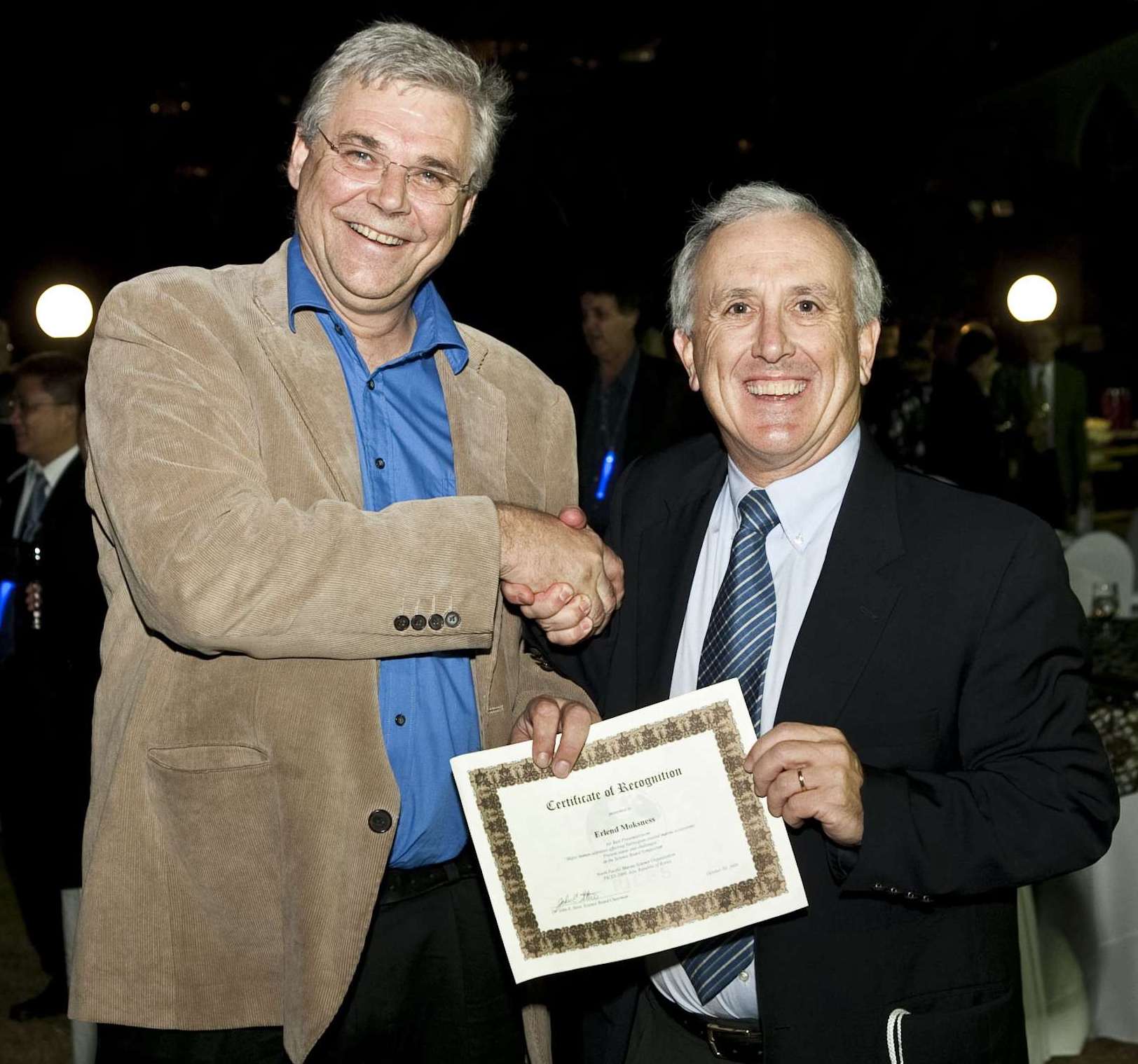
Erlend Moksness is a Research Director
at the Institute of Marine Research in Norway.
He has been responsible in establishing a research
and management advice program on the Coastal Zone
Ecosystem at the same institute. His background
is in recruitment in marine fish, fish ageing,
stock enhancement of marine fishes and aquaculture
of marine fishes. He has published 87 scientific
articles and co-editor of 11 proceedings and scientific
books.
Dr. Franz Mueter works as Assistant
Professor at the Juneau Center of the School of
Fisheries and Ocean Sciences, University of Alaska
Fairbanks. Born and raised in northern Germany,
Franz began biological studies at the Rhino-Westphalian
Technical Institute in Aachen before moving to
Fairbanks in 1988 to pursue graduate degrees in
biological (M.S.) and fisheries oceanography (Ph.D.),
as well as biostatistics (M.S.). His research
initially focused on the early life history of
pollock and flatfishes in nearshore waters of
the Gulf of Alaska, and gradually expanded to
include adult groundfish communities throughout
the Gulf of Alaska and Bering Sea. He has also
modeled recruitment processes of salmon in relation
to temperature variability throughout the Northeast
Pacific and has worked on other anadromous species
in Alaskan waters, including the Arctic. His research
interests currently include the effects of environmental
variability on the distribution, abundance, recruitment,
and survival of fishes in subarctic and arctic
waters. He is particularly interested in the applied
aspects of this research as they relate to the
management of fisheries resources in the face
of global climate changes. He serves as co-chair
of ESSAS Working Group 4 on “Climate Effects
at Upper Trophic Levels” and is a member
of the new PICES/ICES
Working Group on “Forecasting Climate
Change Impacts on Fish and Shellfish”.
Prof. Murtugudde's research has
focused on the ocean's role climate from intraseasonal
to decadal time-scales including the impacts of
climate on fisheries, agriculture, water resources,
carbon cycle, and air-sea interaction processes
of scale selection. He has conducted rainwater
harvesting in urban areas and watershed management
in rural areas using the agroforestry technique
as a sustainable method for rural development.
His most recent research has focused on Earth
System Prediction for air and water quality, human
health, agriculture, water and energy resources,
fisheries, and future projections for decision
makers, policy wonks, and educational institutions.
The Chesapeake Bay Forecast Project that he leads
is the first such Earth System Prediction model
to issue routine forecasts of useful environmental
package for Joe, the plumber. This is one of the
few projects that will combine expertise from
climate scientists, bioinformatic experts, computer
scientists, geographers, architects, public health
and epidemiology experts, public policy and health
information researchers, agro-economists, social
scientists, biologists providing a campus-wide
connection to fill the research needs for sustainable
governance of the Earth System. Eventually, this
research to operations transition will develop
an academia-private-military-government partnership
that will be seamless and essential.
Sumant Nigam is a Professor of Atmospheric
and Oceanic Science at the University of Maryland,
with a joint appointment in the university's Earth
System Science Interdisciplinary Center. His research
interests include atmospheric general circulation,
climate variability mechanisms, tropical ocean-atmosphere
interaction, characterization of secular change
in regional hydroclimates, aerosols and monsoons,
climate model assessment, and recently, Great
Plains hydroclimate and droughts. The interests
are pursued through dynamical analysis of observation
and simulation data sets, and diagnostic modeling
of recurrent circulation variability including
teleconnection patterns. Dr. Nigam has been involved
with climate research activities for a number
of years and is currently co-chair of the Climate
Variability working group of NCAR's Community
Climate System Model, and a member of the Climate
Research Committee of The National Academies.
He has previously served as co-chair of the US
CLIVAR panel on Phenomena, Observations and Synthesis;
Director of the Large-scale Dynamic Meteorology
program at the National Science Foundation; Editor
of the Journal of Climate; and on the AMS Committee
on Climate Variability and Change. Dr. Nigam is
a Fellow of the American Meteorological Society.
He obtained his Ph.D. in geophysical fluid dynamics
from Princeton University in 1984, and postdoctoral
training at MIT.
I am interested in decadal-scale
variations in the North Pacific and tropical Pacific,
and roles of the ocean circulations in them. For
the tropical Pacific variability, I have studied
impacts of the shallow meridional overturning
cells, the Subtropical Cells, which connects subtropical
and tropical oceans, on the tropical temperature
fluctuations. For the North Pacific Ocean, I have
been studying variability of the oceanic frontal
zones in the western part of the basin based on
a more-than-50-year-long integration of an eddy-resolving
OGCM. I have been also studying If such oceanic
variations in the frontal zone can have some feedback
to the atmosphere.
Takeshi Okunishi
is a researcher of the National Research Institute
of Fisheries Science, Fisheries Research Agency,
Japan. He received his Ph.D. from the Hokkaido
University on research about marine ecosystem
modeling in the Okhotsk Sea. His current research
includes ecosystem dynamics linking climate change
and variability of fisheries resources.
Recently, his group
developed a 3-D high-resolution (1/4 x 1/6 degrees
horizontally) ecosystem model coupled with a fish
migration model. His goal is to develop an integrated
ocean model synthesizing the physical, chemical
and biological processes and to clarify the impact
of climate change on marine ecosystems.
Erik Olsen is a senior scientist
and heads the Research Program for Oil and Fish
at the Institute of Marine Research in Bergen,
Norway. He has a background as a fisheries biologist
(PhD), but has since 2002 focused his research
and advisory activities on marine spatial management
by participating in developing the integrated
and area-based management plans for the Barents
Sea and Norwegian Sea. Key research areas within
MSP have been the identification of ecologically
valuable areas, areas of conflict of interest,
the role of governance and cumulative vulnerability
of ecosystem components to human use have been
key areas of research.
Angelica Peña is a research
scientist with Fisheries and Oceans, Canada at
the Institute of Ocean Sciences (IOS), Sidney,
British Columbia. Her research interests include
biogeochemical cycles and phytoplankton ecology
of the NE subarctic Pacific, and the development
of coupled circulation ecosystem models to study
the dynamic relationships that exist between the
plankton and its environment. She received her
B.S. from the University of Concepcion, Chile
and her M.Sc. and Ph.D. degrees in oceanography
from Dalhousie University, Canada. She has been
involved in several international programs including
JGOFS, GLOBEC and ECOHAB. She is a member of the
PICES Biological Oceanography Committee.
John Pinnegar is
Programme Director for Marine Climate Change at
Cefas, the UK government fisheries lab in Lowestoft,
England. His research interests include, the impact
of climate change on marine animal populations,
marine food-webs and ecosystem modelling, stable
isotope analysis and predator-prey interactions,
marine protected areas, bioeconomic modelling.
He is a current co-chair of the ICES Working Group
on Multispecies Assessment Methods (WGSAM) and
he has published widely on trophic interactions
and the relative importance of fishing
and climatic factors
in determining fish stock status. He plays an
active role in many EU and national research programmes,
and completed his PhD in 2000, at the University
of Newcastle, on Mediterranean food-webs and carbon-nitrogen-phosphorus
budgets. He is an honorary lecturer at the University
of East Anglia, and was awarded the Fisheries
Society of the British Isles ‘FSBI Medal’
in July 2009, in recognition of younger scientists
who are deemed to have made exceptional advances
in the study of fish biology and/or fisheries.
Jennifer (Jenny) Purcell received
her PhD in 1981 from the University of California,
Santa Barbara, followed by postdoctoral appointments
at the Woods Hole Oceanographic Institution
and the University of Victoria, British Columbia,
and Assistant Professor at Oregon State University
to Full Professor the University of Maryland.
She currently is a Marine Scientist at the Shannon
Point Marine Center of Western Washington University
and a visiting researcher at the Coastal and
Marine Resources Centre of the University College
Cork, Ireland. She is the author of over 80
publications, editor of three symposium volumes,
and associate editor of Marine Biology. She
has studied the trophic interactions and population
dynamics of pelagic cnidarians and ctenophores
in many regions of the Atlantic, Pacific, and
Arctic oceans. She explores the roles of jellyfish
as predators and competitors of zooplanktivorous
fish, and climate effects on the formation of
jellyfish blooms.
Bo Qiu is a Professor at the Department
of Oceanography, University of Hawaii at Manoa.
His scientific interests include large-sacle ocean
circulation variability, midlatitude air-sea interaction,
geophysical fluid dynamics, and satellite oceanography.
He has published more than 40 articles in peer-reviewed
journals and was recently a contributing author
for the IPCC 4th Assessment Report. Bo was a recipient
of the Okada Prize from the Oceanographic Society
of Japan, as well as the New Investigators Award
from the NASA's Mission to Planet Earth Program.
He currently serves as a co-chair of the US-CLIVAR
Western Boundary Current Ocean-Atmosphere Interaction
Working Group. He is also a member of the US Argo
Implementation Panel, the International CLIVAR
Pacific Panel, and the International CLIVAR Asia-Australian
Monsoon Panel.
Jack
Rensel Rensel
Associates Aquatic Sciences, U.S.A.
Dr. Rensel works with business,
academic, governments and native people in the
U.S. and overseas. His primary expertise involves
impact assessment of benthic and water column
effects of aquaculture and related simulation
modeling for inshore and offshore locations. Since
the 1970s he has been involved in harmful algal
bloom studies, particularly with regard to bloom
dynamics and how they affect wild and cultured
fish and shellfish. His company performs field
assessments of physical and biological food web
conditions in temperate and tropical marine waters
as well as in freshwater riverine and high-altitude
lakes in North and South America. He has been
active in assisting state and federal governments,
NGOs and industry to develop performance-based
standards for aquaculture. He works with U.S.
NOAA scientists and others to conduct bioenergetic
studies of commercially important fish species
for calibration of aquaculture simulation models
(www.AquaModel.org).
He has worked with Pacific Northwest Tribes, south
American natives, and native Hawaiian peoples
to protect and enhance their marine and freshwater
fisheries resources and environmental quality
with focus on nutrient dynamics, eutrophication
of nearshore waters and sediment contamination
studies.
Dr. M. Begoña Santos PhD
in Zoology (University of Aberdeen, UK, 1998).
Research Scientist at IEO since 2006. She works
in the fields of ecology, abundance estimation
and feeding ecology of marine mammals and also
on fisheries of small pelagic fish in the Northeast
Atlantic. She has participated in more than 20
international projects including studies on ecology
of pelagic fish and their predators and also projects
on fish stock assessment and fisheries management.
She is currently involved in monitoring and studying
the pelagic ecosystem of the Galician and Cantabrian
shelf (N Spain), the distribution of the species
and their relationships with the environment,
using the information gathered via two annual
acoustic cruises. She has published more than
50 articles in peer-reviewed journals. Currently
she co-supervises several PhD students on subjects
related with the ecology of different cetacean
species and their interactions with fisheries
in the waters of the NE and SW Atlantic. She is
a member (alternate) of the ICES Scientific Committee
and of the ICES WGMME.
Michael Sinclair did his graduate
studies in biological oceanography at Southampton
University and the Scripps Institution of Oceanography.
From 1972 until 1978 he was a professor in the
oceanography section at the University of Quebec,
in Rimouski. Research during this period was on
phytoplankton ecology in estuaries. He joined
the Bedford Institute of Oceanography (BIO) in
1978, initially working on herring population
biology and fisheries advice. This was followed
by research on invertebrate fisheries, and administration,
at the Halifax Fisheries Research Laboratory (1982
to 1987). Since 1988 he has held administrative
positions at BIO, being the director since 2002.
Research interests have been on fish population
ecology, fisheries management studies and the
history of fisheries research.
Dr Anthony D.M. (Tony)
Smith is currently a Senior Principal Research
Scientist with Australia's Commonwealth Scientific
and Industrial Research Organisation (CSIRO),
Division of Marine and Atmospheric Research, in
Hobart, and a Stream leader in CSIRO’s Wealth
from Oceans National Flagship. He currently chairs
several scientific committees for the assessment
and management of Australian fisheries and marine
resources.
Dr Smith has been with CSIRO for
20 years. Prior to that he had research assignments
as an entomologist at the University of Adelaide,
Australia, and as an epidemiologist with the Centre
for Environmental Technology, Imperial College,
London, UK.
Dr Smith has contributed widely
to the assessment and modelling of fisheries and
marine resources in Australia as well as globally,
including development of methods for scientific
evaluation of fishery harvest strategies. In 2003,
he was the recipient of the Centenary of Federation
Medal for his contributions to Australian and
international fisheries science.
In recent years,
Dr Smith has contributed to the development of
the FAO Code of Conduct for Responsible Fisheries
guidelines on the precautionary approach to capture
fisheries, and on indicators for sustainable development
of marine capture fisheries. He has made a major
contribution to the development of the Commonwealth
Harvest Strategy Policy in Australia, and to developing
generic scoring guidelines for sustainable fisheries
for the Marine Stewardship Council, and has recently
become a member of their Technical Advisory Board.
He has led development of a number of tools in
support of ecosystem based fisheries management,
including methods for ecological risk assessment
of fisheries.
Dr Smith has a BSc Honours (1st
Class) from the University of Adelaide, Australia
and a PhD (Zoology) from the University of British
Columbia, Canada.
Dr. Yvette Spitz is an associate
professor in the College of Oceanic and Atmospheric
Sciences at Oregon State University. Her research
interests include ecosystem dynamics and physical/biological
interactions. In the last decade, her research
has focused on the development of ecosystem models
that can be applied to the world ocean, spanning
tropical microbes to ice algae. Her past and present
regions of interest include the eastern boundary
upwelling region off Oregon, the North Pacific
basin, the Arctic ocean and the North Sea. She
is also an expert in data assimilation applied
to coupled circulation and ecosystem models.
Dario Stucchi is a physical oceanographer
at the Institute of Ocean Science. He has more
than 30 years of experience in many aspects of
coastal physical oceanography in British Columbia.
His research activities have been mainly directed
towards environmental issues dealing with the
impacts of wastes (sewage, pulp mills and mines)
in the coastal waterways and fjords of BC. In
the last decade his focus has been on aquaculture
issues in British Columbia. He has modelled the
near-field waste deposition from finfish farms
and worked with numerical modellers on the development
of ecosystem scale coastal ocean models. Most
recently, Dario has collaborated with the salmon
farming industry on the development of coupled
biophysical models of disease transmission and
sea lice interactions in the Broughton Archipelago.
Bunmei Taguchi received his Ph.D
in Meteorology from University of Hawaii at Manoa
in 2006. His Ph.D study examined decadal variability
of the Kuroshio Extension (KE), a swift western
boundary current (WBC) in the North Pacific ocean.
Using high-resolution regional and global ocean
models, he found that basin-scale, wind-forced
Rossby waves are transformed into meridionally
narrow jet structures, causing variations in the
KE region with large amplitudes. Such variability
narrowly-confined within the KE jet is relevant
to local ecosystem variability as well as air-sea
interaction in the region where intense heat and
moisture exchanges are largely influenced by the
frontal structures in sea surface temperature.
Since he moved to Earth Simulator Center, Japan
Agency for Marine-Earth Science and Technology
after his graduation, he has been involved with
development/diagnosis of ocean-atmosphere coupled
models to study interactions among large-scale
ocean circulations, ocean fronts and overlying
large-scale atmosphere, and their roles in basin-scale
climate and its variability.
Motomitsu Takahashi
is a research scientist at the Seikai National
Fisheries Research Institute, Fisheries Research
Agency, Japan. His interests concern the mechanisms
relating population dynamics of small pelagic
fishes to environmental variables. His initial
work during his graduate and postdoctoral studies
focused on Japanese anchovy and sardine in the
Kuroshio-Oyashio transitional waters, a major
nursery ground for both species. Dr. Takahashi
proposed a theory of growth rate-dependent recruitment
based on his
examinations of
otolith variability in the region. His interests
have expanded to include northern anchovy and
Pacific sardine in the California Current region,
and he has been trying to elucidate possible mechanisms
regarding the population dynamics of these taxa
in the eastern and the western North Pacific since
2005. Currently, he also studies small pelagic
fishes, chub mackerel, jack mackerel, and Japanese
anchovy in the East China Sea.
Dr. Andrew Trites is a Professor
at the University of British Columbia where he
is Director of the UBC
Marine Mammal Research Unit and Research Director
of the North
Pacific Universities Marine Mammal Research Consortium.
Dr. Trites has been studying marine mammals in
the North Pacific for over 25 years. His research
involves captive studies, field studies and simulation
models that range from single species to whole
ecosystems. His research program is designed to
further the conservation and understanding of
marine mammals, and resolve conflicts between
people and marine mammals. The training of students,
and the collaboration between researchers specializing
in other disciplines (such as nutrition, ecology,
physiology and oceanography) is central to the
success of his research program.
Tomowo Watanabe is Director of the
Marine Environmental Data Integrated Analysis
Center at National Research Institute of Fisheries
Science, Fisheries Research Agency, Japan. His
division is carrying out development and operation
of an ocean forecast system for the western North
Pacific Ocean and he is playing an important role
in data management for the data assimilation.
His main research interest is in the mechanisms
of long-term variations of the western North Pacific
Ocean. He is now tackling the data rescue of old
oceanographic observation data obtained by fisheries
institutions in Japan in order to reconstruct
oceanographic conditions around Japan in the last
century.
Lixin Wu obtained his Ph.D from
Peking University, and worked at Center for Climatic
Research of University of Wisconsin-Madison for
a decade. He moved back to Ocean University of
China in 2005 and was honored with a named professorship.
He is the chief scientist of the National Basic
Research project NPOIMS funded
by Chinese Ministry
of Science and Technology (973), with focusing
on the North Pacific Subtropical Ocean Circulation
Variability and its impacts on coastal environments.
His research interests include dynamics
of large-scale ocean-circulation, ocean-atmosphere
interaction, decadal climate variability, and
modeling global climate system. He and colleagues
proposed a “Modeling Surgery” framework
to examine and understand effects of ocean-atmosphere
teleconnections on climate variability such as
Pacific decadal Oscillation, North Atlantic Decadal
variability, tropical ocean-atmospheric circulation
trends etc. He has published over 40 articles
in Journals such as Journal of Climate, Journal
of Physical Oceanography, Climate Dynamics, Geophysical
Research Letters etc.
Tamiji Yamamoto is a Professor of
the Graduate School of Biosphere Science at Hiroshima
University, who has been working on water and
sediment quality and their effects on the total
ecosystems in semi-enclosed coastal seas. Impacts
of anthropogenic activity on the Japanese coastal
marine ecosystems are quite high, because of not
only high material loads from the land but also
intensive fisheries activity including aquaculture.
His work focuses on quantifying material budgets
especially of biophilic elements such as C, N
and P, which will provide scientific supports
for governers/managers to perform “integrated
coastal zone management”. Recently his study
is extending to development of practical remediation
methods of sediment quality in aquaculture grounds
and ports and harbors where almost no organisms
are residing. He was awarded in his young age
the Okada Prize for promising younger scientists
from the Japanese Society of Oceanography. He
was also given a prize in 2008 for his excellent
publication entitled “Environmental Restoration
of Semi-enclosed Coastal Seas” from the
Japanese Association for Coastal Zone Studies.
Since 1998 Dr. Yasuhiro Yamanaka
has been an Associate Professor in the Faculty
of Environmental Earth Science, Hokkaido University.
He received his PhD from the University of Tokyo
on research about marine carbon-cycle modeling
in 1995, spent one year as visiting researcher
at Princeton University in 1997, and recently
spent three months as visiting fellow at the University
of East Anglia in 2007-2008. During his term as
Assistant Professor of the Center for Climate
System Research (CCSR), University of Tokyo, he
developed the CCSR Ocean General Circulation Model
and CCSR/NIES Climate Model contributing to IPCC
TAR (2001).
He also plays as a SSC member in AIMES, a core
project of IGBP from 2008. His current research
includes ecosystem dynamics linking climate change
and variability of fisheries resources. His goal
is to develop an integrated ocean model synthesizing
the physical, chemical and biological processes
and to clarify dynamics and feedbacks relevant
to the impact of global warming on marine ecosystems.
Recently, his group developed a 3-D high-resolution
(1/4 x
1/6 degrees horizontally) ecosystem model coupled
with a fish migration model.
Naoki Yoshie is a Research Assistant
Professor in the Center for Marine Environmental
Studies at Ehime University since last April in
2009. He received his Ph.D from the Hokkaido University
on research about lower-trophic-level marine ecosystem
modeling in the western North Pacific in 2002
and worked at Hokkaido University as a post-doctoral
scholar until 2006. From 2006 to 2009, He has
been developed and applied an ecosystem model
to reproduce 5 different ecological provinces
around Japan collaborating with field monitoring
groups of Fisheries Research Agency, Japan. His
main interest is in the Plankton Functional Types
(PFTs) model with affection for the marine ecosystem.
Since last April, his group tries to develop a
3-D high-resolution ecosystem model for the coastal
regions such as the Seto Inland Sea and East China
Sea.
Richard E. Zeebe is an Associate
Professor in the Department of Oceanography at
the University of Hawaii at Manoa. He received
his PhD in Physics from the University of Bremen
in Germany and worked at Columbia University in
New York as a post-doctoral scholar. His research
focuses on the global carbon cycle, biogeochemistry
and paleoclimatology. This includes a broad spectrum
of topics, ranging from physico-chemical properties
of molecules and the biogeochemistry of tiny marine
organisms to climate change and ocean acidification
at the global scale. He has authored and co-authored
more than forty publications in peer-reviewed
international journals and has published a book
on CO2
chemistry in seawater. He is also an editor of
the international journals Climate of the
Past and Paleoceanography.
Latest updates:
August 3, 2009
S6 Invited Speaker - Fanny Douvre (cancelled)
S6 Invited Speaker - Erik Olsen (new)
Publications
marked PDF can be viewed and or printed using the Adobe
Acrobat Reader®